
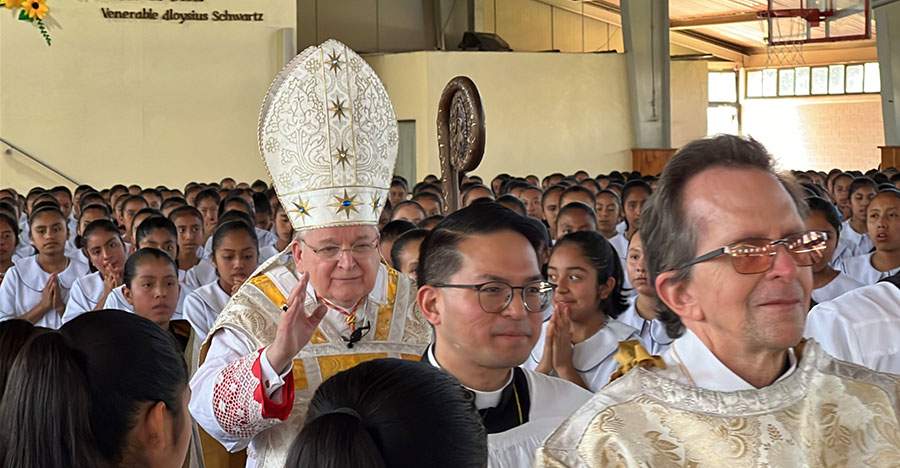
Cardinal Burke Visits Chalco and Is Swept Into Hope for the World
By Kevin Wells
On a cold Wisconsin night around Christmastime, Cardinal Raymond Burke warmed his soul by recalling one of the most memorable moments of his 77 years. It had taken place just months earlier, at Villa de Las Niñas in Chalco, Mexico, where he walked among more than 3,000 girls living peacefully behind tall stone walls at a vibrant Catholic live-in school on the outskirts of Mexico City.
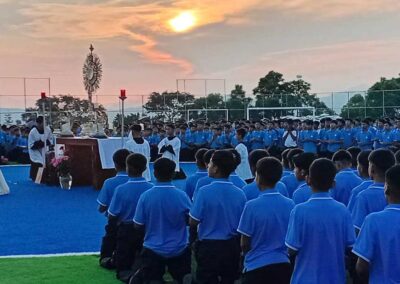
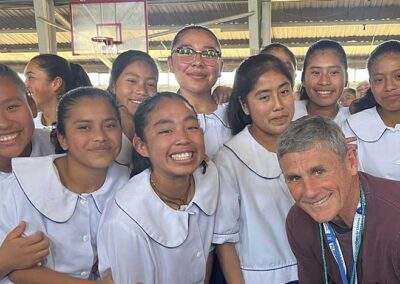
He spoke in particular of the Mass he celebrated for the girls and for the Sisters of Mary, the religious community who have devoted their lives to caring for their spiritual daughters in Mexico and in five other countries. In the silence of the cavernous gymnasium, Cardinal Burke recalled meeting the gaze of Mexico’s bullied and most vulnerable—girls from Guerrero, Oaxaca, Durango, Veracruz, Puebla, Jalisco, and countless other impoverished villages. Rows and rows of girls stood quietly in blue skirts and white blouses, bobby socks and black saddle shoes.
He had been told that many of them had suffered wounds too deep for words. So as the Mass began, the bishop’s eyes glistened; he was suddenly gazing upon a mystery beyond the natural order. Cardinal Burke saw Jesus Christ crucified—over and over—and he rejoiced. He felt he had been pulled into a humble kingdom of resurrection, where endless lines of girls stood like thousands of Jairus’ daughters—once left for dead, risen, and now moving forward.
He understood that before him was not only suffering, but new life and promise: a tranquil sea of young women abiding in the slow work of living again after breaking the surface of a lifetime of drowning waves. Each girl, he knew, was in the midst of fleeing some form of persecution—searing memories, recurring nightmares, or assaults endured amid the violence of poverty.
“Thousands of girls, many marked by suffering, were gathered in attentive silence before Our Lord,” he said. “Their witness reminded [me] and [all of] us that true Christian joy is born not from the absence of the Cross, but from fidelity to Christ on the way of the Cross. Their devotion revealed hearts healed by grace and animated by divine love. … [what I saw] was not superficial cheerfulness. What was striking was their joy, expressed with simplicity and freedom [from their wounds].”
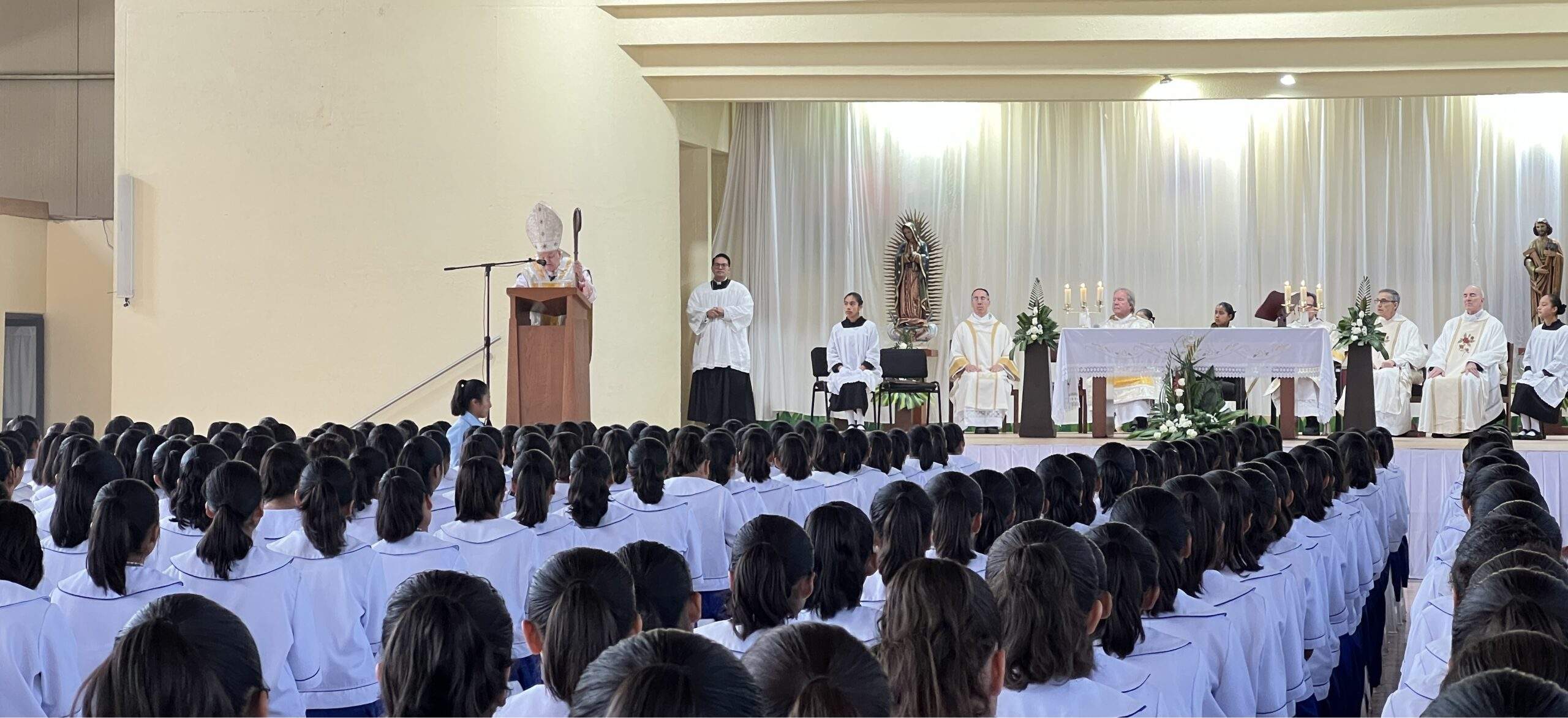
Through countless Masses and Rosaries, through hours spent before Jesus in Adoration, through the absolution of sins, patient counseling, and the steady maternal love of the Sisters of Mary, Cardinal Burke understood that he was looking upon innumerable resurrections—slow, fragmentary, real, and often times, raw and untamed.
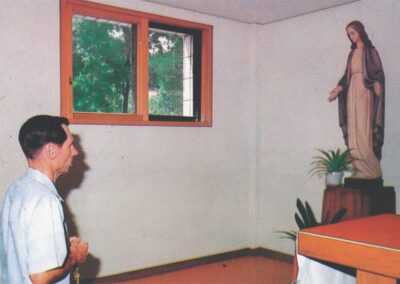
The bishop from Wisconsin had joined a large group of pilgrims to the Girlstown community in Chalco after encountering the remarkable and holy life of Washington, D.C.–born Venerable Aloysius Schwartz, founder of the Sisters of Mary and of the Boystown and Girlstown communities. After reading Schwartz’s biography, Priest and Beggar: The Heroic Life of Venerable Aloysius Schwartz, Cardinal Burke came to recognize a divine architecture at work—miracles unfolding with a startling blend of mystery, magnitude, and providential timing.
At the Mass, Cardinal Burke preached to the girls in fluent Spanish, reminding the girls of their spiritual father still in their midst. Even from Heaven, Fr. Al would always be close.
“He came to us as a very simple and kind man, who became very close to the children,” said Sr. Martha, the Superior of the Girlstown community. “He asked for the girls to sit with him at lunch. The entire time he was with them, he made it very easy for the girls to see that he cared for them, and shared a closeness with them.”
Cardinal Burke was struck by the magnitude of the girls’ joy—their vibrancy and lightness—and by how they had achieved what seems impossible for so many who have endured devastation, injustice, and lives marked by destitution.
“The joy and goodness of these young women bear eloquent witness to a central truth of the Gospel: evil is overcome not by human strength, but by divine charity,” he said. “Their suffering has not been denied or ignored, but taken up into the redemptive love of Christ and transformed by the grace which He pours forth into our hearts from His glorious-pierced Heart.”
“Their joy proclaims that God’s love is stronger than injustice and violence. Where sin sought to destroy dignity, Christ restores it. This is the victory of the Cross made visible, revealed through truth, forgiveness, prayer, and the life of the Sacraments.”
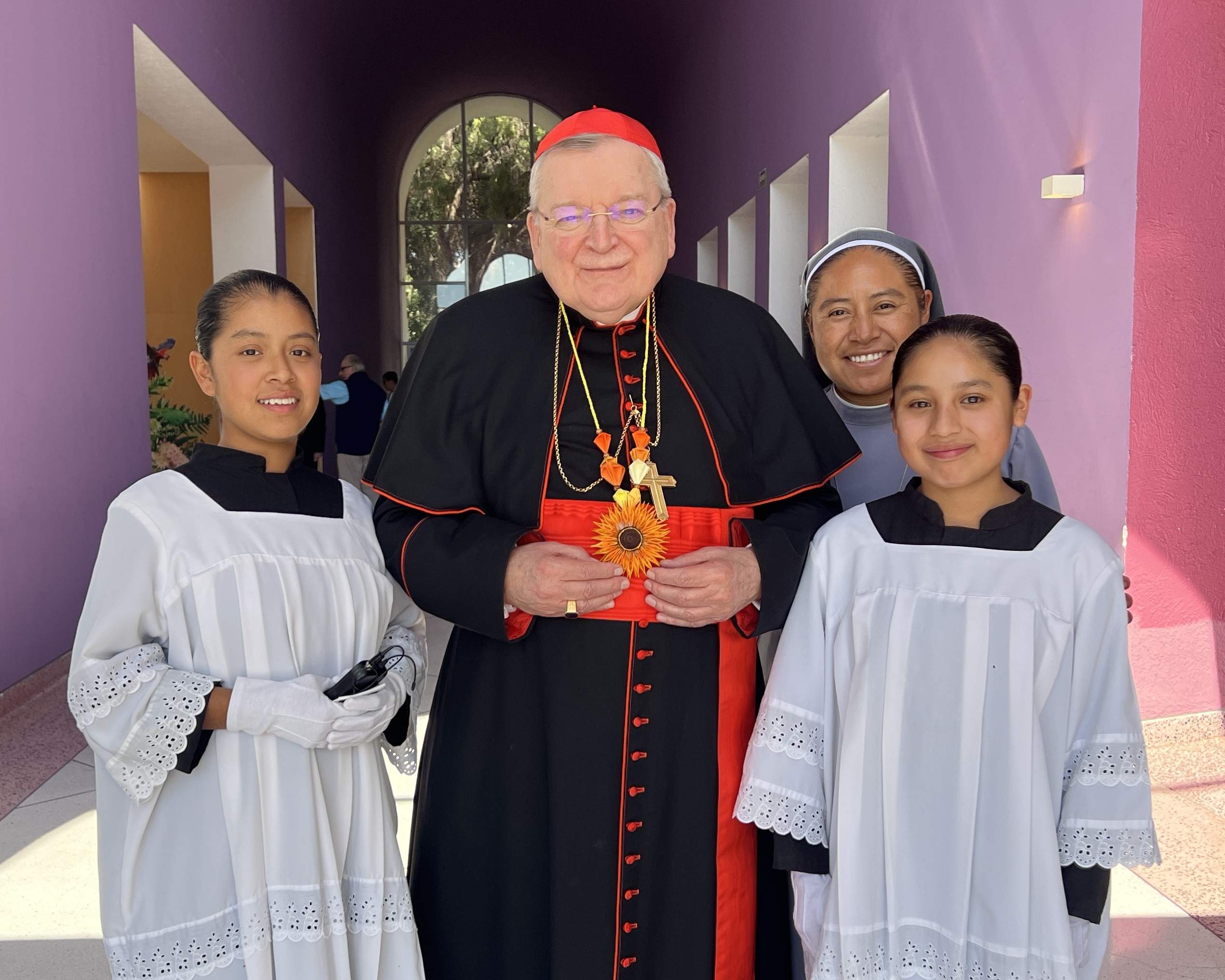 Two young ladies, who Cardinal Burke referred to as his “Guardian Angels” were his altar servers at Mass and escorted him around the 81-acre campus for most of the day. He shared a lively conversation with them at lunch.
“At times, I could see tears in his eyes with the girls,” said John Clegg, a pilgrim who accompanied Cardinal Burke in Guadalupe and at Chalco. “He was visibly moved; very impacted by the Sisters and children. … He said that he had never seen anything like it in his life.”
Cardinal Burke said that Chalco, in a sense, holds a key to renewing the Church, the world, and society itself. He pointed to the Sisters’ one-to-one maternal care for each student, and to the students’ own one-to-one courtesy and respect for one another, as a living witness that reverence for the dignity of every human soul is essential if society is to flourish.
“To recover such resurrected joy, society and the Church must return to the primacy of the human person, created and redeemed by God. This joy is born where Christ is truly present,” he said. “The witness of the Sisters of Mary shows that when lives are ordered by prayer, sacrifice, and service, even profound wounds become places of grace. Such joy is not manufactured but received. It flows from fidelity to Christ and from entrusting wounded lives to the maternal care of His Blessed Mother, who leads her children to Him Whom alone saves, Who by His Cross brings us to the glory of the Resurrection.”
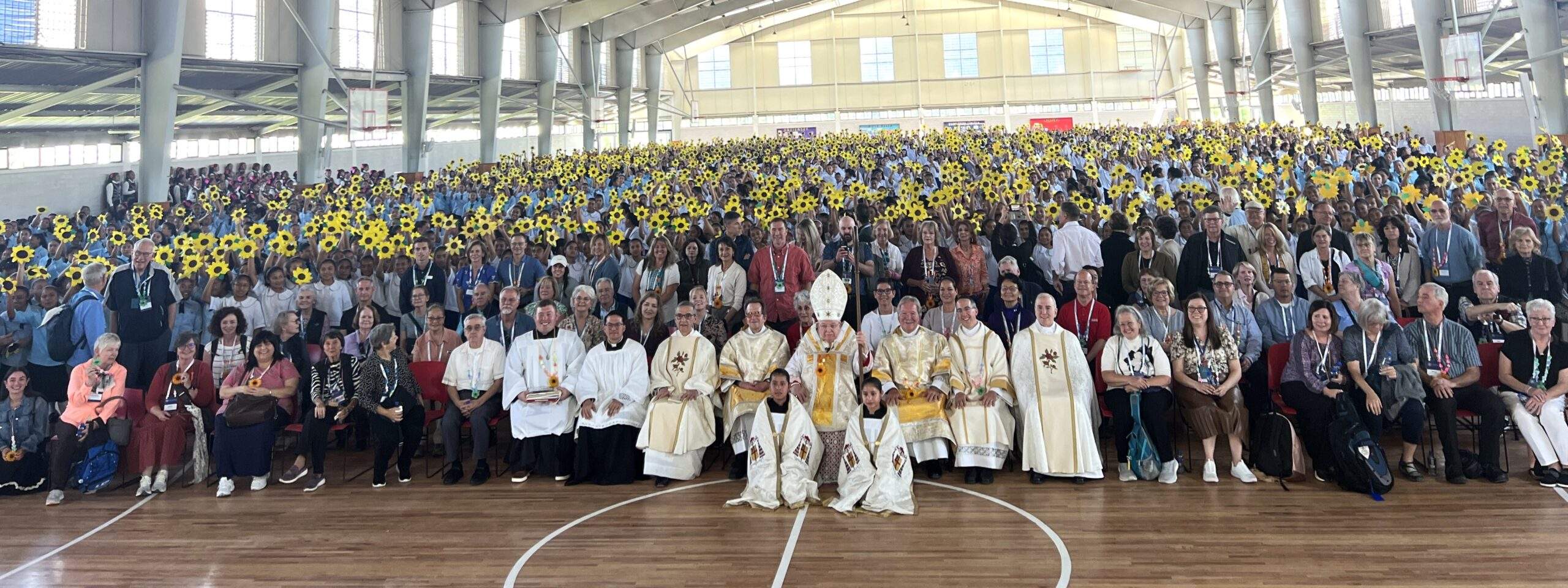
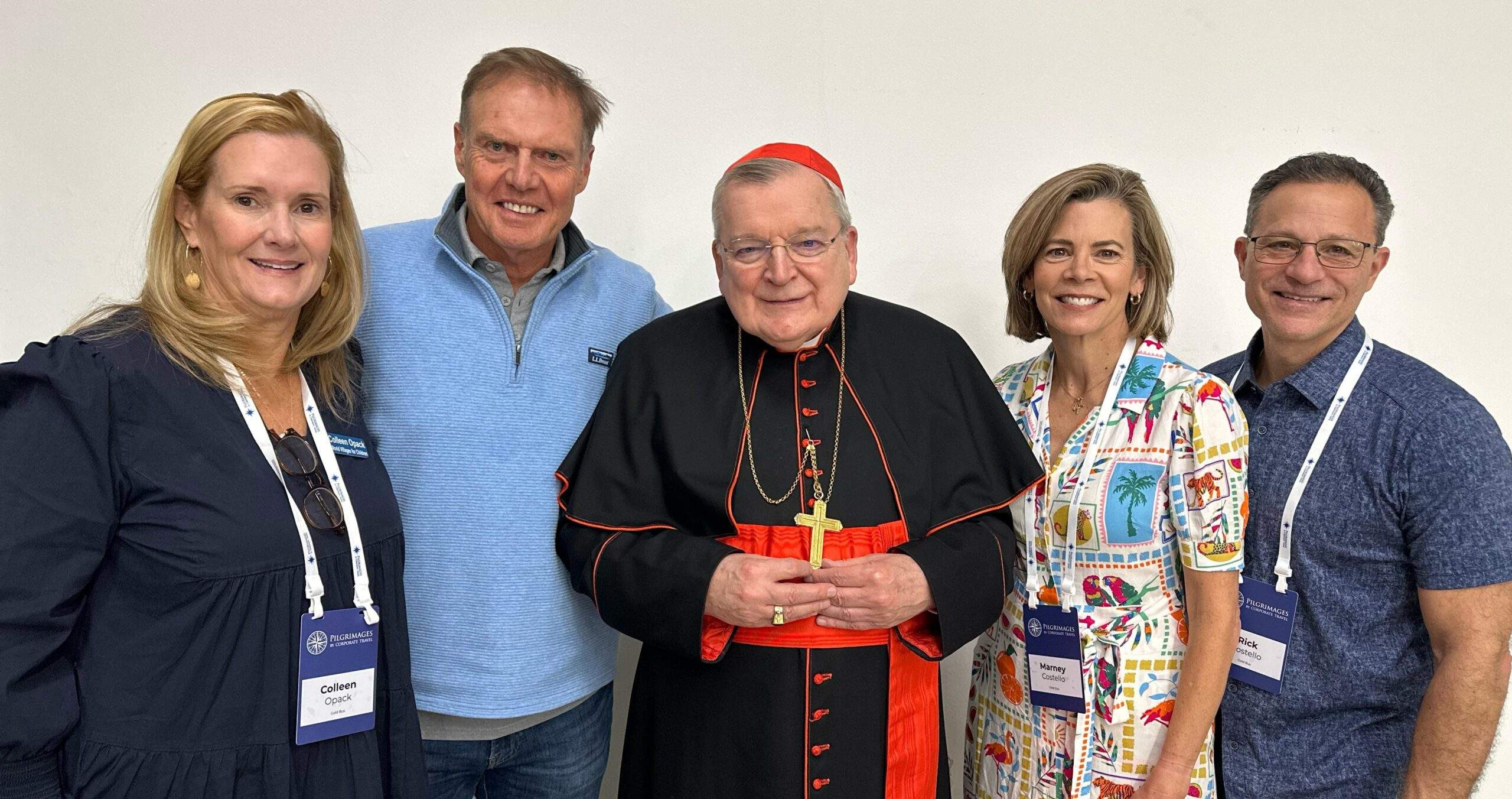
Cardinal Burke with World Villages for Children Board members John Clegg and Marney and Rick Costello, along with our staff member Colleen Opack.
His Eminence Cardinal Raymond Burke shares his reflections after visiting the Sisters of Mary at Villa de las Niñas in Chalco, Mexico.